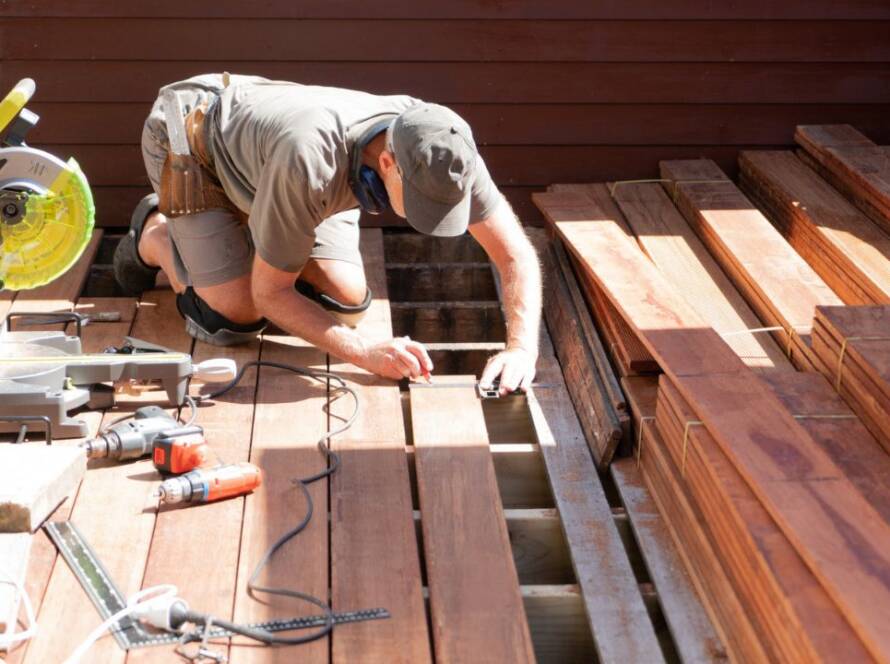
Thinking about adding a deck? You already picture the morning coffee, the summer cookouts, and the slow evenings outside. Before you fall in love with a design, though, you need a real number.
In 2027, most homeowners will pay $30 to $50 per square foot for a simple pressure treated wood deck built by a pro. Composite decks usually cost $45 to $75 per square foot. For a common 16×20 deck in the Raleigh area, that puts most projects somewhere between $9,600 and $24,000.
Below, we break that price into simple parts: size, materials, labor, permits, and the extras people forget. We also share what our team sees during home inspections across Raleigh, Durham, and Chapel Hill, so you can spot a cheap deck that will cost you more later.
Quick Answer: Deck Costs at a Glance
- Raleigh area average: A 16×20 wood deck addition cost about $16,441 in 2025, based on the Cost vs. Value Report.
- National average: The same report puts a wood deck at $18,263 and a composite deck at $25,096.
- Price per square foot: $30 to $50 for pressure treated wood and $45 to $75 for composite, installed.
- Labor alone: About $13 to $30 per square foot in Raleigh.
- Value at resale: Wood decks in Raleigh got back about 84% of their cost when the home sold.
- Permits: Most decks attached to a house in North Carolina need a building permit and inspections.
Average Cost to Build a Deck in 2027
You will see very different “average” numbers online. One site says $7,000, another says $25,000. Both can be right, because they measure different decks.
Small, low, simple decks pull the average down. Larger decks with stairs, railings, and composite boards push it up. Angi reports that a deck in Raleigh costs about $7,209 on average, with most jobs falling between $3,969 and $10,595. The Cost vs. Value Report prices a full 16×20 deck with stairs and railings, so its number runs higher.
The better question is what your deck will cost. That comes down to four things:
- Size: More square feet means more boards, more framing, and more hours.
- Material: Composite and hardwood cost more upfront than pressure treated pine.
- Height and shape: A second story deck or a curved, multi level design needs more posts, bracing, and skill.
- Site conditions: A sloped yard, tree roots, or hard clay soil makes footings harder to dig.
Deck Cost by Size
This table shows typical installed prices for common deck sizes in the Triangle area. Wood ranges use $30 to $50 per square foot. Composite ranges use $45 to $75 per square foot.
| Deck Size | Square Feet | Pressure Treated Wood | Composite |
| 10×10 | 100 | $3,000 to $5,000 | $4,500 to $7,500 |
| 12×12 | 144 | $4,320 to $7,200 | $6,480 to $10,800 |
| 12×16 | 192 | $5,760 to $9,600 | $8,640 to $14,400 |
| 14×20 | 280 | $8,400 to $14,000 | $12,600 to $21,000 |
| 16×20 | 320 | $9,600 to $16,000 | $14,400 to $24,000 |
| 20×20 | 400 | $12,000 to $20,000 | $18,000 to $30,000 |
These prices cover a ground level or slightly raised deck with basic stairs and railings. A high deck, built in benches, lighting, or a roof will add to the total.
Deck Cost by Material
Your decking board choice changes both the upfront price and how much work the deck needs later. Raleigh summers are hot and humid, and winters bring cold rain, so this choice matters here more than in a dry climate.
Pressure Treated Wood
- Material cost: About $2 to $4 per square foot in Raleigh.
- Why people pick it: It is the cheapest option and easy for any crew to work with. Most decks in North Carolina use it.
- The catch: It can warp, crack, and splinter. Plan to clean and reseal it every two to three years.
- Best for: Tight budgets and homeowners who don’t mind regular upkeep.
Cedar
- Material cost: About $3 to $6 per square foot.
- Why people pick it: It looks warm and natural and resists warping better than treated pine.
- The catch: The wood is soft, so it dents and scratches. It still needs sealing.
Composite
- Material cost: About $10 to $19 per square foot.
- Why people pick it: It handles our humid weather well and needs little care. Soap, water, and a light wash a couple of times a year keep it clean.
- The catch: It costs more upfront, and you can’t sand out scratches the way you can with wood.
- Best for: Homeowners who plan to stay put and want to spend weekends relaxing, not staining.
PVC Decking
- Why people pick it: It is fully synthetic, so it won’t rot, stain easily, or attract insects.
- The catch: It often costs as much as or more than composite, and some boards get hot in direct sun.
Tropical Hardwood (Ipe)
- Material cost: About $9 to $17 per square foot for the boards.
- Why people pick it: It is very hard, very dense, and lasts for decades.
- The catch: It is heavy and tough to cut, so labor costs go up.
Aluminum
- Material cost: About $13 to $17 per square foot.
- Why people pick it: It won’t rot or burn, and it needs almost no upkeep.
- The catch: It gets hot under the summer sun, which matters if you have kids or dogs.
Labor Cost to Build a Deck
Labor is a big part of your bill. In Raleigh, deck builders usually charge $13 to $30 per square foot. On many projects, labor makes up close to half of the total price.
A few things push labor costs up:
- Digging footings in rocky or root filled ground
- Removing and hauling away an old deck
- Building more than a few feet off the ground
- Angles, curves, picture frame borders, or multiple levels
- Hard to cut materials like ipe
Spring and early summer are the busiest months for deck crews. If you can plan your build for fall or winter, you may get faster scheduling and more room to negotiate.
Extra Costs Most People Forget
The price per square foot covers the deck itself. These add ons can raise your final bill by a few hundred dollars or by several thousand:
- Old deck removal: Tearing out and hauling away a worn deck takes time and dump fees.
- Stairs and railings: Long stair runs and upgraded railings (cable, glass, or metal balusters) cost more than basic wood rails.
- Built in benches or planters: Plan for roughly $1,000 to $3,000.
- Lighting: Step and post lights often run $200 to $1,500. Each new outdoor outlet adds about $110 to $260.
- Shade: A retractable awning can cost $520 to $3,050. A pergola or full roof costs much more.
- Fire features: An outdoor fireplace can run from about $1,300 to nearly $7,000.
- Permits: Usually a few hundred dollars, depending on your city and the size of the project.
- Repairs to the house: If the siding or rim board behind the deck has hidden rot, it must be fixed before a new deck can attach to it.
Ask every contractor to list these items on the quote. A low bid that leaves them out will grow once work starts.
Do You Need a Permit to Build a Deck in North Carolina?
In most cases, yes. North Carolina uses one statewide building code, and Raleigh, Durham, Chapel Hill, and Cary all follow it. The code includes a section just for decks, called Appendix M of the North Carolina Residential Code. It covers footings, ledger boards, beams, joists, railings, and stairs.
Here is the simple version:
- Attached decks: A deck fastened to your house almost always needs a permit.
- High decks: Any deck more than 30 inches above the ground needs a permit, attached or not.
- Low freestanding decks: Some small decks under 30 inches that don’t touch the house may be exempt. Your local inspections office has the final say, so call before you build.
- Inspections: Expect at least a footing inspection, a framing inspection, and a final inspection.
- Zoning: Setback and lot coverage rules are separate from the building permit. HOA approval may also apply.
Skipping the permit can save a few hundred dollars today. It can also cost you thousands later. Home inspectors and buyers’ agents often ask for permit records, and an unpermitted deck can slow a sale or force you to open up the work for inspection.
Why the Cheapest Deck Quote Can Cost You More?
At Enteck, we wear two hats. We run home inspections and we work as a licensed general contractor. That means we see decks from both sides: how they get built, and how they hold up five or ten years later.
When we inspect homes around the Triangle, the same deck problems show up again and again:
- Missing ledger flashing: Without metal or membrane flashing above the ledger board, rain runs behind it and rots the house framing.
- Weak ledger connections: Nails alone can’t hold a deck to a house. The code calls for proper bolts or structural screws.
- Shallow or undersized footings: Posts that sit on thin pads or shallow holes can sink and shift.
- Wobbly railings: Railings must resist real force. Many older decks fail a simple push test.
- Rusted hangers and fasteners: Treated lumber eats cheap hardware. The wrong nails and hangers corrode over time.
- Unsafe stairs: Uneven steps and missing handrails cause many falls.
A contractor who skips these details can beat any quote on price. You pay for it later in repairs, a failed inspection when you sell, or a safety risk to your family. A good builder includes them from day one and shows them on the quote.
DIY vs. Hiring a Pro
Building a deck yourself can save you a big part of the labor cost. It also comes with real risk.
DIY can work if:
- The deck is small, low, and freestanding
- You own or can rent the right tools
- You have time to pull permits and pass inspections yourself
- You have built framing projects before
Hire a pro if:
- The deck attaches to your house
- It sits more than a few feet off the ground
- You want composite or hardwood boards, which show every mistake
- Your yard slopes or has drainage problems
- You want the job done in days, not months of weekends
Remember that a deck carries people, furniture, and grills. Mistakes in the ledger or footings are hidden under the boards, and they are the parts that matter most for safety.
Is a Deck Worth the Money?
For most homeowners, yes. A deck adds living space for far less than a room addition, and it holds its value well at resale.
The 2025 Cost vs. Value Report from Zonda tracks how much of a project’s cost comes back when you sell:
- Wood deck, national average: Cost $18,263 and added $17,323 in resale value, about 95% back.
- Composite deck, national average: Cost $25,096 and added $22,199, about 89% back.
- Wood deck in Raleigh: Cost $16,441 and added $13,814, about 84% back.
- Composite deck in Raleigh: Cost $23,545 and returned about 74.5%.
In plain terms, a wood deck in the Raleigh market gives back more of its cost at sale. Composite costs more upfront but saves you years of sanding, staining, and sealing. If you plan to sell within a few years, wood often makes more sense. If you plan to stay, composite can pay you back in free weekends.
7 Smart Ways to Save Money on Your Deck
You don’t need the biggest budget to get a great deck. These choices cut costs without cutting safety:
- Keep the shape simple. A square or rectangle uses fewer cuts and less waste than angles and curves.
- Build closer to the ground. A low deck needs shorter posts, less bracing, and often simpler railings.
- Mix your materials. Use pressure treated lumber for the hidden frame and composite only for the boards and rails you see and touch.
- Pick standard board lengths. Designing around 12, 16, or 20 foot boards cuts waste.
- Build in the off season. Fall and winter are slower months for deck crews in North Carolina.
- Add extras later. Pour your budget into a solid frame now. Lighting, benches, and shade can come next year.
- Reuse what is still sound. If you are replacing an old deck, an inspection can show whether any footings or framing are safe to keep.
What a Good Deck Quote Should Include?
A fair price is easy to compare when every quote shows the same details. Before you sign, make sure yours lists:
- Deck size, height, and layout drawing
- Decking, framing, and railing materials by brand or grade
- Footing size, depth, and number of posts
- How the deck attaches to the house, including ledger flashing
- Stairs, landings, and handrails
- Permit fees and who handles inspections
- Old deck removal and cleanup
- A start date, a timeline, and a payment schedule
- Warranty on labor and materials
Our clients often tell us the itemized breakdown and project schedule are what helped them say yes. Several reviews on our client testimonials page mention the color coded schedules and 3D renderings Clarence prepares during planning. Whoever you hire, ask for that level of detail. It protects you from surprise charges.
Questions to Ask Before You Hire a Deck Builder
- Are you licensed and insured in North Carolina?
- Will you pull the permit and be present for inspections?
- How will you attach the deck to my house?
- What fasteners and hangers do you use with treated lumber?
- Can I see photos of decks you built a few years ago, not just last month?
- Who will be on site each day, and how will you keep me updated?
Frequently Asked Questions
How much does a 12×12 deck cost?
A 12×12 deck has 144 square feet. Expect about $4,320 to $7,200 for pressure treated wood and $6,480 to $10,800 for composite, installed.
How much does a 20×20 deck cost?
A 20×20 deck has 400 square feet. Most homeowners pay about $12,000 to $20,000 for wood and $18,000 to $30,000 for composite.
What is the cheapest way to build a deck?
Build a simple rectangle close to the ground with pressure treated lumber. Skip curves, multiple levels, and built in features for now. You can add them later.
Is composite decking worth it in North Carolina?
For many homeowners, yes. Our humid summers and wet winters are hard on wood. Composite resists rot and needs no staining. It costs more upfront, so it pays off best if you plan to stay in your home for many years.
How long does it take to build a deck?
Most simple decks take about one to two weeks of build time once work starts. Design, material orders, and permit review can add a few more weeks, so plan ahead if you want the deck ready for spring.
How long will my new deck last?
A pressure treated deck often lasts 10 to 15 years with regular sealing, and longer with good care. Quality composite decks often last 25 years or more. The frame underneath matters as much as the boards on top.
Does a deck add value to my home?
Yes. According to the 2025 Cost vs. Value Report, a wood deck in Raleigh returned about 84% of its cost at resale. Buyers also like homes with ready to use outdoor space.
Can I build a new deck on top of my old one?
Usually not. Covering an old deck hides rot, weak footings, and loose ledger connections. Have the old structure inspected first. If the frame is sound, you may only need new boards and railings, which costs much less than a full rebuild.
Final Thoughts
So, how much does it cost to build a deck? For most homes in the Triangle, plan on roughly $30 to $50 per square foot for wood and $45 to $75 for composite. Your real price depends on size, height, materials, and the extras you choose.
The smartest move is to set a budget, pick your must haves, and get two or three detailed quotes. Compare what each quote includes, not just the final number.
If you live in Raleigh, Durham, or Chapel Hill and want a deck built to code from the footings up, our team at Enteck is happy to help. You can learn more about our general contracting services, contact us online, or call (919) 420-3397 to talk through your project.
About the Author
This guide was written by the Enteck team and reviewed by Clarence Livingstone, owner and project manager of Enteck Design Group, LLC. Enteck holds both a home inspector license and a general contractor license, and serves homeowners, realtors, investors, and interior designers across Raleigh, Durham, and Chapel Hill.