The inspection is done. The report is in your inbox. And now you have to figure out what to do next, often within a very short window of time.
This is where a lot of buyers freeze. The report is long. The findings feel overwhelming. And the clock is ticking because North Carolina’s due diligence period does not wait.
This guide walks you through every step to take after receiving your home inspection report, in order, with clear guidance on what to prioritize and how to approach each stage strategically.
First, Understand Your Timeline
Before anything else, know how much time you have.
In North Carolina, home purchases operate under a due diligence period. This is the agreed-upon window of time during which the buyer can conduct inspections, review findings, request repairs, and decide whether to proceed with the purchase or withdraw.
If you withdraw before the due diligence deadline, you forfeit your due diligence fee but retain your earnest money deposit. Once the deadline passes, walking away from the deal costs you significantly more.
That window is your most valuable asset after receiving the inspection report. Every step in this guide should happen within it. Do not let the report sit in your inbox for three days before you start acting on it.
Step 1: Read the Full Report Before Reacting
The very first thing to do is read the entire report, not just the summary page.
The summary pulls major findings to the front. It is a useful starting point. But the full report contains photos, context, and detail that change how you understand each finding. A summary item that reads as alarming often becomes much more manageable when you read the full explanation and see the photos.
Read once to get a general sense of the home’s condition. Read again to start categorizing findings by severity. By the end of that second read, you should have a clear mental picture of what is genuinely serious and what falls into routine homeownership territory.
If you have already read our guide on how to read a home inspection report, you already know the severity framework to use here. Apply it as you go through the findings.
Step 2: Separate Findings Into Three Categories
After reading, organize every finding into one of three buckets.
Bucket 1: Safety Hazards and Major Defects These are the findings that directly affect your safety, the livability of the home, or its structural integrity. Electrical hazards, foundation concerns, active water intrusion, crawl space mold, and roof damage fall here. These are your negotiating priorities.
Bucket 2: Moderate Issues and Aging Systems These are functional but failing or approaching end of life. An HVAC unit that is 13 years old. A water heater that is past its expected lifespan. Plumbing that works today but shows signs of deterioration. These belong in your budget planning for the first few years of ownership, and in some cases are worth negotiating depending on cost.
Bucket 3: Maintenance Items and FYI Notes Caulk that needs refreshing. A door that sticks slightly. Gutters with minor debris. These are normal homeownership realities. They do not belong in your repair request and should not be part of your negotiation. Add them to your post-closing maintenance list and move on.
This sorting step removes emotion from the process. Instead of reacting to a long list of findings, you are making deliberate decisions based on category.
Step 3: Get Specialist Quotes for Bucket 1 Findings
A home inspector identifies problems. They are not always the right person to tell you what those problems cost to fix. That is what specialists are for.
For any safety hazard or major defect in Bucket 1, contact the appropriate specialist before your negotiation deadline.
| Finding Type | Who to Call |
| Foundation movement or structural concern | Licensed structural engineer |
| Electrical panel or wiring issues | Licensed electrician |
| Roof damage or significant deterioration | Licensed roofing contractor |
| Active plumbing leak or pipe concern | Licensed plumber |
| Crawl space moisture or mold | Crawl space or remediation specialist |
| HVAC failure or near end of life | Licensed HVAC contractor |
| Termite or pest damage | Licensed pest control company |
These quotes do two things. They confirm the severity of the finding with a qualified specialist. And they give you a real cost number to use in negotiations rather than a guess.
Raleigh Note: Raleigh’s busy real estate market means contractors are often booked. Call specialists as soon as you have identified your major findings, not after you have already made negotiation decisions. Getting three quotes on a foundation concern before your due diligence deadline runs out requires moving quickly.
Step 4: Decide What to Negotiate and What to Accept
This is the most strategic step in the entire post-inspection process. And it is where most buyers either leave money on the table or overreach and damage the negotiation.
The general principle is this. Negotiate on safety hazards and major defects. Accept maintenance items and normal wear. Approach aging systems case by case based on cost.
Focus your formal repair request on a short, specific list of the most significant findings. A repair request with 40 items signals to the seller that you are either inexperienced or trying to squeeze every penny from the deal. A repair request with five well-documented major findings signals that you are reasonable, informed, and focused on the issues that genuinely matter.
You have three main options when negotiating after an inspection.
Request repairs before closing. You ask the seller to hire a licensed contractor and complete the work before the closing date. The advantage is you know the work is done. The risk is you cannot always control the quality of a seller-hired contractor.
Request a closing credit. Instead of repairs, you ask the seller to reduce the purchase price or provide a credit at closing equivalent to the cost of addressing the issues yourself. This gives you control over who does the work and how.
Request a price reduction. Similar to a credit but reflected in the adjusted purchase price rather than closing costs. Some loan types handle these differently, so confirm with your lender which approach works best for your financing structure.
Decide which approach fits your situation before you make the request. Your agent is a valuable partner in this conversation.
Step 5: Submit the Repair Request Formally
Once you know what you are asking for, submit the repair request in writing through your real estate agent. Verbal conversations do not carry the same weight in the transaction.
The request should include the specific findings you are addressing, the basis for each request (safety hazard, major defect, documented cost from a specialist quote), and what resolution you are seeking (repair, credit, or price reduction).
Be specific. “Address the electrical panel” is a weaker request than “Replace the Federal Pacific Stab-Lok panel, identified as a safety hazard by the inspector and confirmed by a licensed electrician as requiring full replacement.”
Specificity demonstrates that you have done your homework. It is harder to dismiss than a vague list of concerns.
Step 6: Evaluate the Seller’s Response
The seller can respond in one of several ways.
They may agree to all requests. They may agree to some and decline others. They may offer a flat credit instead of individual repairs. They may decline everything and hold firm on the original price. Or they may counter with a different resolution that requires further discussion.
Evaluate their response against your Bucket 1 findings specifically. If the seller agrees to address the safety hazards and major defects, that is a reasonable resolution even if they decline the moderate issues. If the seller refuses to acknowledge a legitimate safety hazard, that tells you something important about how they have managed the property and what the closing process may look like.
Your due diligence period is still active at this point. If the seller’s response is unacceptable and negotiation reaches an impasse, you still have the option to withdraw before the deadline.
Step 7: Schedule a Final Walkthrough Before Closing
If the seller agreed to make repairs before closing, schedule a final walkthrough as close to the closing date as possible. This is your chance to confirm that the agreed-upon repairs were actually completed.
During the walkthrough, check each repair specifically. If the seller agreed to replace a failing exhaust fan, verify the new unit is installed and functioning. If a plumbing leak was to be repaired, run the water and check underneath for moisture.
If repairs were not completed or were completed poorly, you have the right to raise this before the closing documents are signed. This walkthrough is not a formality. Treat it as a final verification step.
Step 8: Build a Post-Closing Maintenance Plan From Bucket 2 and 3
Everything that did not make your repair request still needs attention eventually. The difference is timing and urgency.
Take your Bucket 2 findings and assign a realistic timeline to each one. An HVAC system at the end of its life should be budgeted for replacement within the first one to two years. A water heater that is aging should be monitored and replaced proactively before it fails. Galvanized plumbing that is showing signs of corrosion is a multi-year project to plan and budget for.
Take your Bucket 3 maintenance items and build a first-year to-do list. Refresh the caulking. Fix the sticking door. Clean the gutters. These are simple tasks that keep small issues from becoming bigger ones.
A post-closing maintenance plan built from your inspection report is one of the most practical things a new homeowner can do. It turns the inspection from a transaction document into a long-term ownership guide.
What If You Are the Seller?
Everything above describes the buyer’s process. But sellers receive inspection findings too, either through their own pre-listing inspection or through the buyer’s repair request.
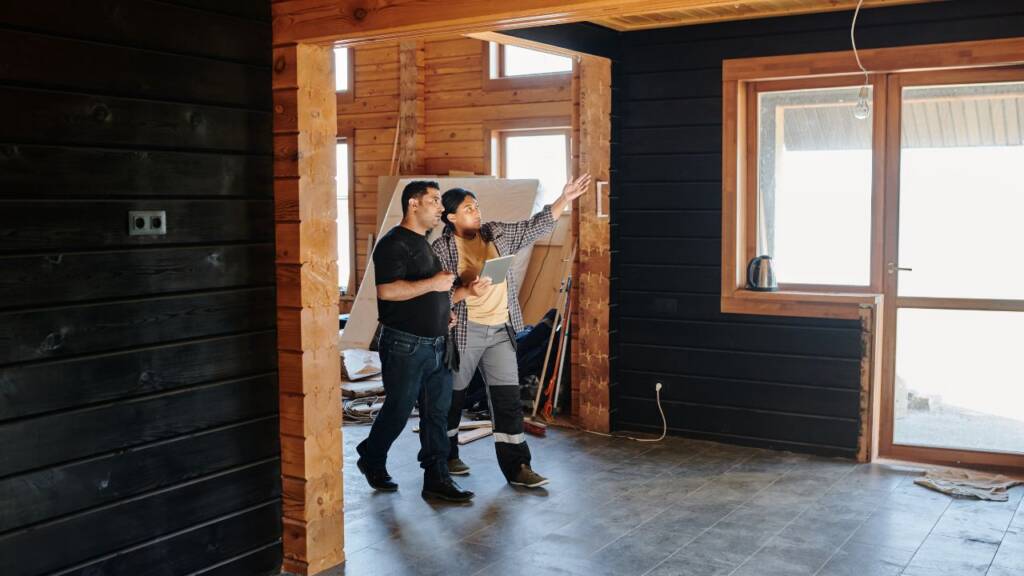
If you are a seller receiving a repair request, here is how to approach it strategically.
Read the request carefully and separate emotional reactions from factual ones. A buyer asking for a credit on a legitimate safety hazard is not attacking your home. They are doing exactly what their agent and inspector advised them to do.
Respond to the significant items and hold firm on the minor ones. Agreeing to everything makes you look motivated to close at any cost. Declining everything risks the deal falling apart. A targeted, reasonable response keeps the transaction moving.
If repairs are agreed to, use licensed professionals and document the work with receipts and permits where applicable. Buyer agents will follow up at the final walkthrough and undocumented repairs create friction right before closing.
Where Enteck Fits Into This Process?
The steps above assume you have access to accurate repair cost information, the ability to get specialist quotes quickly, and a clear understanding of what each finding actually means structurally.
That is exactly where Enteck’s dual licensing creates real value.
At Enteck Design Group, we hold NC Home Inspector License #4457 and NC General Contractor License #81098. When you bring us your inspection report, we can tell you which findings are genuinely serious, what each one will realistically cost to fix, and whether the inspector’s classification accurately reflects the severity of the issue. We can also handle the repairs directly if the seller agrees to work or if you take a credit and want the work done properly after closing.
You get one team, one point of contact, and honest answers at every stage of the post-inspection process.
We serve buyers, sellers, realtors, and investors across the Raleigh, Durham, and Chapel Hill Triangle area.
Frequently Asked Questions
How long do I have to respond to a home inspection report in North Carolina?
Your response window is tied to your due diligence period, which is negotiated as part of your purchase contract. Buyers in Raleigh typically have between 14 and 30 days, though competitive markets have pushed some due diligence periods shorter. Know your deadline before anything else.
Can I back out of the purchase based on the inspection findings?
Yes, during the due diligence period. You can withdraw from the contract for any reason before the due diligence deadline and retain your earnest money deposit, though you forfeit the due diligence fee. After the deadline passes, withdrawing from the deal has significantly larger financial consequences.
Should I ask for every issue in the report to be fixed?
No. Focus your repair request on safety hazards and major defects only. Asking the seller to address minor maintenance items dilutes the strength of your legitimate requests and can create unnecessary friction in the negotiation.
What if the seller refuses to make any repairs?
Evaluate whether the purchase price still makes sense given the work you will be inheriting. If the seller refuses to address genuine safety hazards and offers no credit, weigh that against your remaining due diligence timeline and decide whether to proceed or withdraw.
Is a closing credit better than asking for repairs?
It depends on your situation. A credit gives you control over who does the work and how. Seller-completed repairs give you a resolved issue before you own the home but you cannot always control the quality. Discuss both options with your agent before deciding.
Can Enteck provide repair quotes to support my negotiation?
Yes. We can assess the findings in your report and provide honest cost estimates that you can use in your repair request. Contact us as soon as you receive your report so there is enough time before your due diligence deadline.
What happens if repairs agreed upon by the seller are not completed before closing?
You have the right to raise this at the final walkthrough before signing closing documents. If agreed repairs are incomplete or done poorly, this is a legitimate reason to delay closing until the issue is resolved.
How do I get in touch with Enteck after receiving my inspection report?
Call or text us at (919) 420-3397 or visit enteck.com. We understand how tight due diligence timelines can be in Raleigh and will work with your schedule.
Final Thoughts
Receiving a home inspection report is not the end of the process. It is the beginning of the most important decision-making window in your home purchase.
Read carefully. Categorize strategically. Get specialist input on what matters. Negotiate on the right things. Verify repairs before closing. And build a maintenance plan from everything else.
Buyers who approach the post-inspection period with this kind of structure protect their investment from day one. Those who react emotionally or ignore the report until it is too late often end up owning problems they did not need to inherit.
Have a report in hand and a deadline approaching? Call Enteck before that window closes.
Call or text: (919) 420-3397 Visit: enteck.com Serving Raleigh, Durham, Chapel Hill, and the entire Triangle area.